A vasectomy is one of the most reliable forms of permanent contraception, with a success rate of over 99.9%.
You won’t be sterile straight away; it usually takes 2-6 weeks for the sperm stored in the seminal vesicles to clear. Around 12 weeks after your procedure, you’ll provide a semen sample to confirm no sperm remain. Once this test is clear, you’re protected for life.
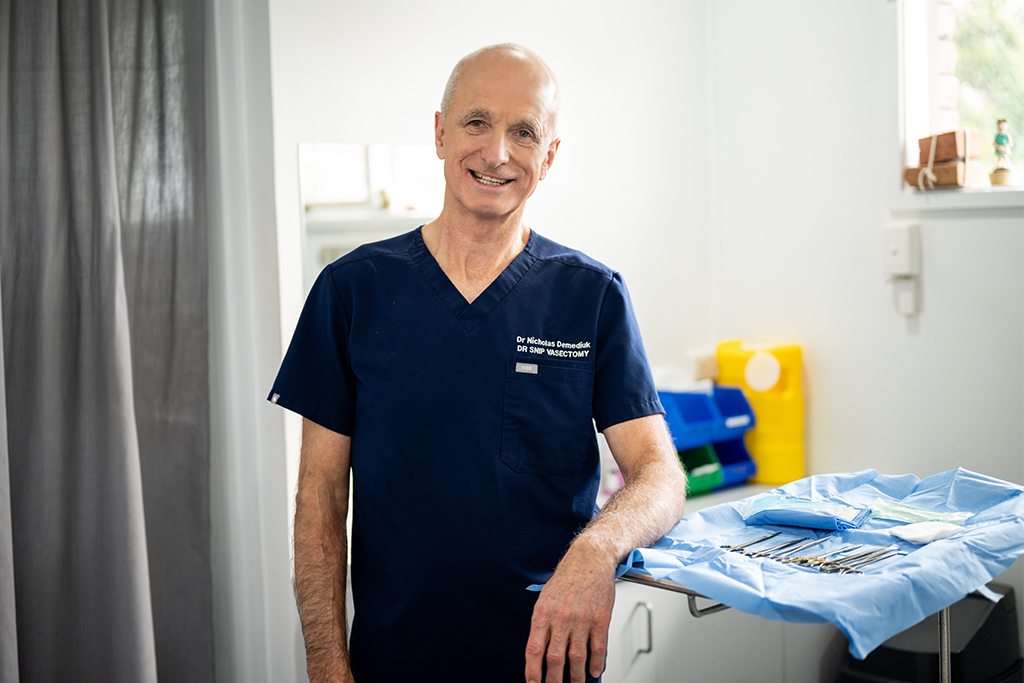
The Dr Snip Method has an exceptionally low failure rate, about 1 in 3,000, compared with 1 in 300 using the traditional method.
You’ll receive detailed pre-appointment instructions when booking.
Key points include:
The vasectomy procedure has an out-of-pocket costs $511.05 after a Medicare rebate*.
*Rebate amounts may vary depending on Medicare fluctuations.
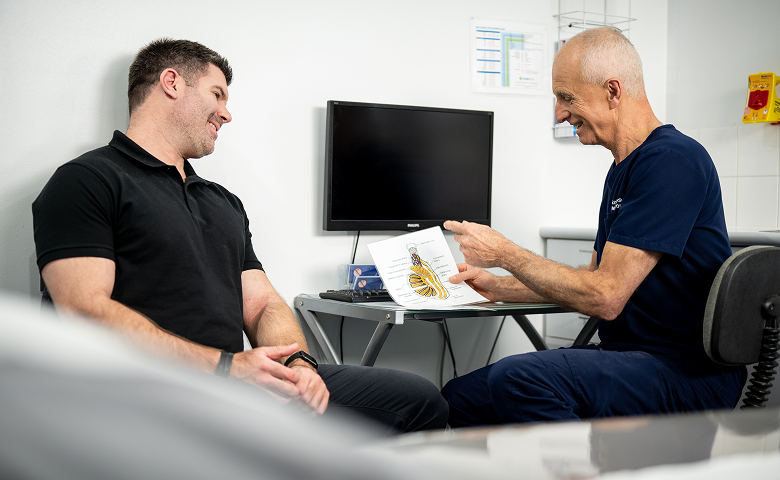
No. The Dr Snip Method™ uses a refined no-scalpel Micro Keyhole technique, even less invasive than traditional methods. There are no stitches, no general anaesthetic, and no need for a hospital stay.
Your doctor will apply a small amount of local anaesthetic using a fine needle, no injections into the penis or testes. A tiny 2- 4 mm
Micro Keyhole opening is made in the centre of the scrotum to access the vas deferens (the tubes carrying sperm).
Each tube is gently divided and sealed using The Dr Snip Method™.
The opening closes naturally. No stitches required.
The entire procedure takes about 5–10 minutes.
Happy gas is available at our Keysborough and St Kilda clinics to assist with relaxation and ease any anxiety during the procedure.
Most patients describe the experience as virtually pain-free. You may feel slight pressure or a mild tugging sensation, but discomfort is minimal. Local anaesthetic ensures you remain comfortable throughout.
You can usually return to non-strenuous work within 24 hours. Avoid heavy lifting, vigorous exercise, or contact sports for seven days. Listen to your body; if it’s sore, rest.
You can resume having sexual activity as soon as you’re comfortable doing so! This is generally between two and seven days after the procedure, once the skin heals over to prevent infection. However, continue using contraception until your 12-week sperm test confirms there are no sperm remaining.
Your body continues to produce sperm as normal, but they are simply reabsorbed naturally, a safe, routine biological process. Your semen will look and feel the same; it just won’t contain sperm.
A vasectomy is intended to be permanent, so you should be certain before proceeding. In some cases, reversal is possible through microsurgery, with success rates of up to 90% within the first 5 years, decreasing over time. Alternatively, in-vitro fertilisation (IVF) with intracytoplasmic sperm injection (ICSI) can be used if sperm were stored before the vasectomy or retrieved directly from the testes.
Note: Medicare does not cover reversal surgery, ICSI, or sperm storage.
Join over 100,000 Australians who’ve successfully experienced The Dr Snip Method™. Simple. Seamless. Virtually pain-free.